Figureoutable

I worry. A lot.

My therapist has a word for it: catastrophizing. I like to think of it as being exceptionally prepared for disasters that will probably never happen.
If there is a possible outcome, my brain has a remarkable ability to skip over the likely ones and head straight for the worst-case scenario. I can take a simple uncertainty and turn it into a full-blown disaster movie (ever seen Sharnado?!) complete with alternate endings, contingency plans, a backup contingency plan, and a healthy dose of anxiety. Give me an unanswered email and I can have us bankrupt, homeless, and living under a bridge before lunch.
The truth is that I have spent years believing that if I worry enough, think hard enough, or plan far enough ahead, I can somehow prevent bad things from happening. Lime I have some sort of superpower for situational control. 
The reality is that worrying has never prevented a single thing. In fact, if I am being completely honest, most of the things I wasted countless hours worrying about never happened at all. My anxiety has predicted approximately 10,432 disasters over the years, and its batting average is not great. For something that sounds so convincing in the moment, it has a surprisingly poor track record.
What struck me recently was the realization that if I were to make a list of everything I have worried about throughout my life, it would be incredibly long. There would be relationships, jobs, finances, family issues, health concerns, moves, losses, and countless situations where I had absolutely no idea how things were going to work out. There were moments when I was convinced I would never get over something, never find an answer, never recover from a loss, or never know what to do next. At the time, those fears felt very real and very overwhelming.
Yet when I look back, every one of those situations eventually became part of my history instead of my future. Some of them resolved themselves. Some of them turned out differently than I expected. Some of them were every bit as difficult as I feared they would be. But every single one of them moved from being an uncertainty to being an experience that I survived. Not only did I survive them, but I learned from them, adapted to them, and carried those lessons forward into whatever came next.
I think that is the part I forget when I am in the middle of worrying. I focus so much on the possibility that something could go wrong that I forget the evidence that has been sitting right in front of me for sixty years. I have a lifetime of proof that I am capable. I have faced challenges I never anticipated, losses I never wanted, and circumstances I certainly would not have chosen. Somehow, every time, I found a way through. It may not have been pretty. It may not have been the path I expected. It may have involved tears, frustration, and more than a few sleepless nights, but I found a way.
As I have gotten older, I can also see that many of the experiences I would never have chosen for myself ended up teaching me exactly what I needed to know. The twists and turns that seemed unfair at the time often carried lessons, wisdom, strength, and perspective that I would not have gained any other way. Looking back, I can see how those experiences shaped me into the person I am today. Had things unfolded differently, I would be a different person with a different understanding of the world.
I am not naïve enough to think I will stop catastrophizing overnight. After all, I have had decades of practice,  have become quite skilled at it and should add it to my resume. What I am trying to do, however, is remember the evidence. The evidence tells me that most of the things I worry about never happen. The evidence tells me that when difficult things do happen, I am capable of handling them. The evidence tells me that I have a remarkably good track record of figuring things out, even when I am convinced that I won’t.
Perhaps that is the lesson I need to carry with me. Instead of putting all my faith in the stories my anxiety creates about the future, maybe I should put a little more faith in the woman who has already navigated every challenge life has placed in front of her. I need to remain grounded in the present reality of doing ‘the next right thing,’ even if I am not 100%sure what that is at the moment, I need to trust myself and my gut. If my past has taught me anything, it is that no matter how uncertain the road ahead may seem, I have always managed to find my way forward. No amount of worrying has ever been as powerful as my ability to adapt, learn, and keep moving forward.
And if sixty years of evidence have taught me anything, it’s this: every dinged-up, messy, complicated thing has eventually been figureoutable.

Peace,
#tutulady
#forwardisapace
Live

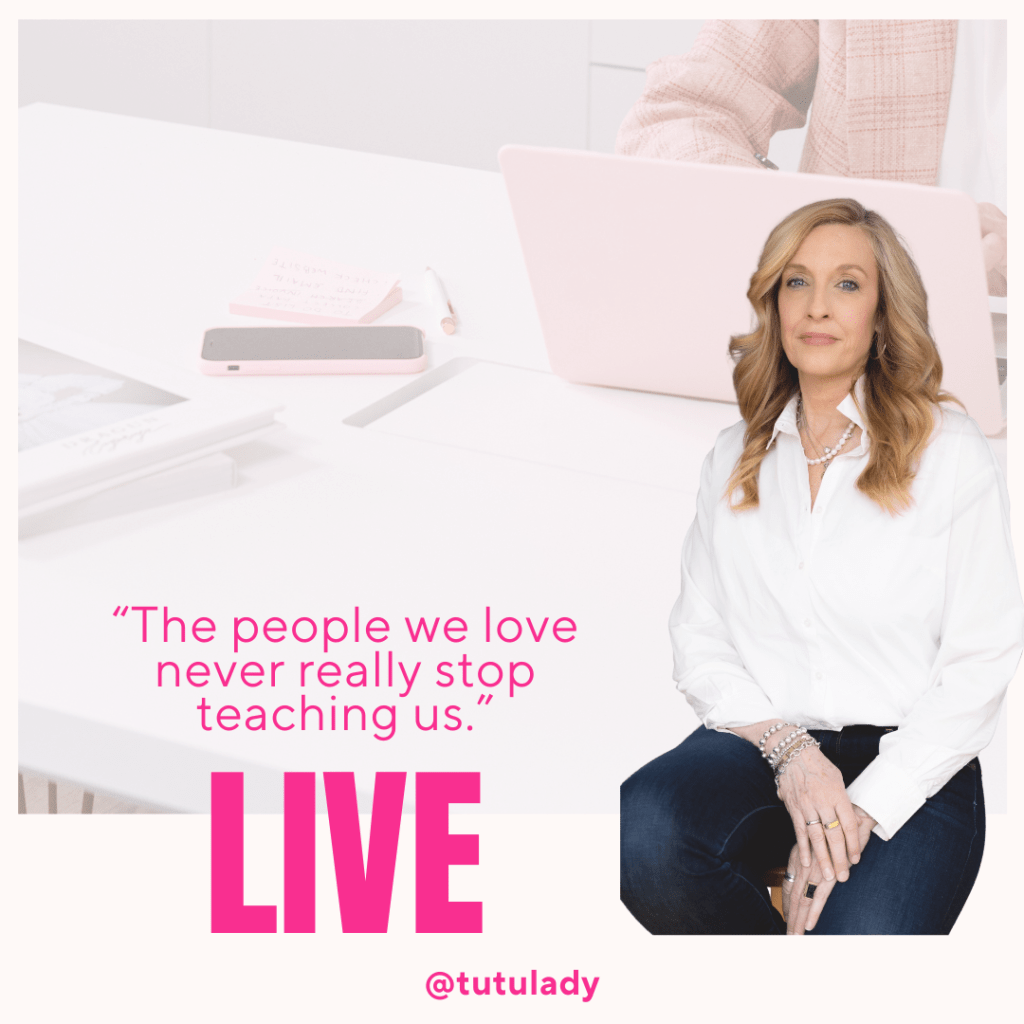
The people we love never really stop teaching us.

Two years ago, my friend Kelly shared these words with me. At the time, they felt like a reminder to live fully, to take chances, to say yes to life, and to not spend my days simply existing.
Today, I read them differently.
Kelly was so prophetic. She died in 2025 and yet somehow, she is still teaching me. Encouraging me to “do the next right thing…”
She taught me that life is not measured by the number of years we are given but by how deeply we love, how fiercely we show up, and how willing we are to embrace the messy, beautiful, uncertain parts of being human.
When I think of Kelly, I don’t think of someone who died slowly. I think of someone who lived. Someone who laughed, loved, cared deeply, and left fingerprints on the hearts of the people lucky enough to know her.
There are days I still want to pick up the phone and tell her something. Days something happens and I think, “I can’t wait to tell Kelly.” Days when I desperately need her wisdom (and humor). Days when I miss her so deeply it catches me off guard.
But then I remember that the people we love never really stop teaching us. Their lessons live on in the choices we make, the risks we take, the kindness we offer, and the way we continue forward carrying a piece of them with us.
So today, as I share these words again, I am thinking of Kelly.
Thank you, my friend, for the reminder to live now. To be curious. To be brave. To wear the bright colors. To chase the dream. To choose joy when I can. Thank you again for the stark reminder to live my life now. I do not want to die slowly. I want to go out kicking and screaming in a cloud of glitter with the devil chasing me down!
I miss you deeply. And am forever grateful that you are still teaching me.
Love your people….. and live every day.

You start dying slowly ;
if you do not travel,
if you do not read,
If you do not listen to the sounds of life,
If you do not appreciate yourself.
You start dying slowly :
When you kill your self-esteem,
You start dying slowly ;
If you become a slave of your habits,
Walking everyday on the same paths…
If you do not change your routine,
If you do not wear different colours
Or you do not speak to those you don’t know.
You start dying slowly :
If you avoid to feel passion
And their turbulent emotions;
Those which make your eyes glisten
And your heart beat fast.
You start dying slowly :
If you do not risk what is safe for the uncertain
If you do not go after a dream
If you do not allow yourself
At least once in your lifetime
To run away from sensible advice
Don’t let yourself die slowly
Do not forget to be happy!

Pablo Neruda
Chilean poet who was awarded the Nobel Prize for Literature in 1971

Peace,
#tutulady
#forwardisapace

Becoming

There is a stage of life that no one really prepares you for, and lately I have realized that I am standing right in the middle of it.
We spend so much of our lives planning the obvious milestones. College. Careers. Marriage. Babies. Houses. Retirement accounts. The whole thing gets mapped out like a timeline we are supposed to follow. There are books, podcasts, experts, and entire industries devoted to helping people navigate those stages. But this stage? The one where the roles that once defined your life quietly shift or even disappear? That part seems to get skipped entirely.
And yet here I am.
For years I was the director of my children’s lives. I scheduled things, organized things, advised on things, and occasionally insisted on things. Now I have moved into a role that no one warned me about: audience member. I am in the stands cheering them on as they build their own lives, trying very hard not to yell unsolicited advice from the sidelines like a slightly overenthusiastic sports/stage mom clapping as loud as I possibly can at every chance I get. It is a beautiful transition, but it is still a transition.
At the same time, another role in my life quietly ended. For the past few years I was a caretaker for my parents, and when they passed away that responsibility ended in a way that left a space I had never really anticipated. When you have been responsible for others for so long, it is a strange realization to wake up one day and understand that the person you are now responsible for caring for is… you.
Caretaker of myself.
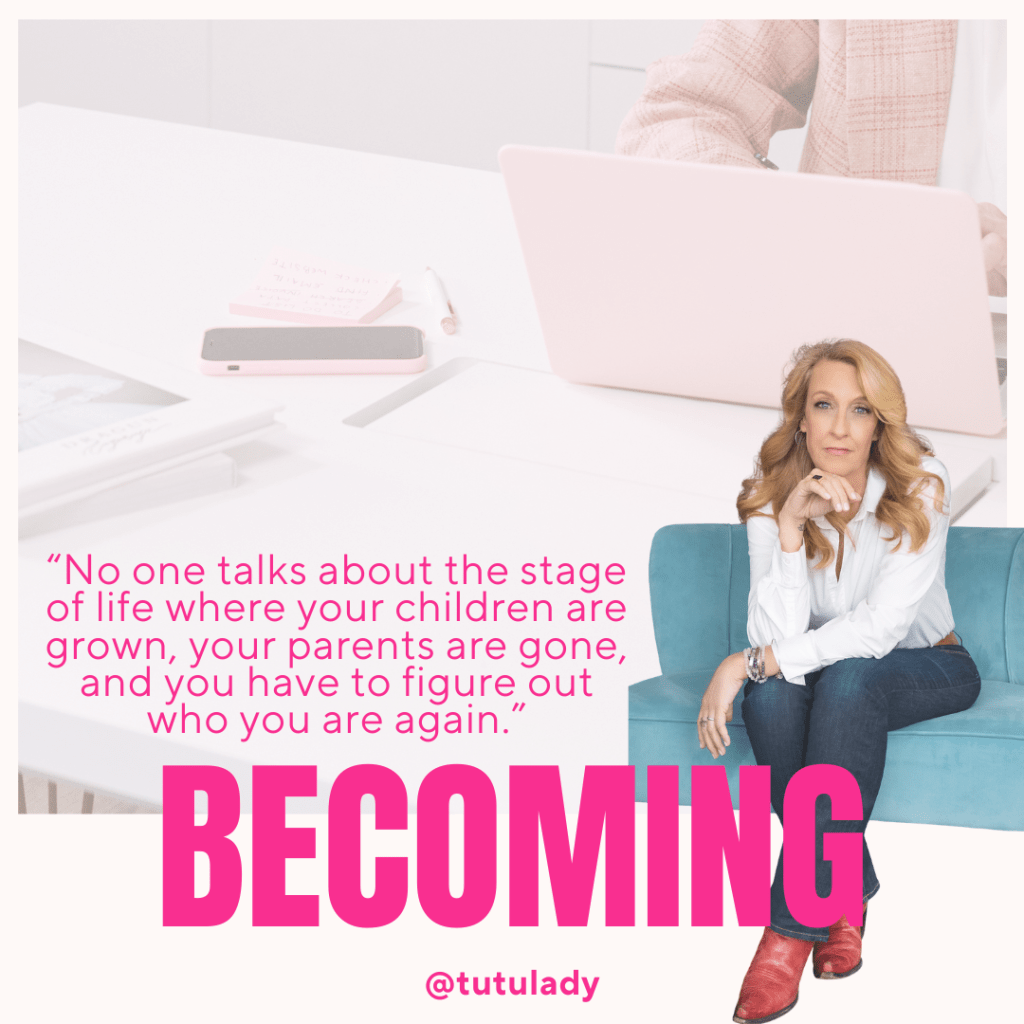
That is a role I never really planned for, and it turns out there is no instruction manual for it. No one sits you down and says, “Here’s what happens when your children are grown, your parents are gone, and you suddenly have to figure out who you are outside of the roles that filled your life for decades.”
Maybe that is why this season feels a little unsteady. Not wrong. Not sad or happy all the time. Just unfamiliar. Although, to be fair, the unsteady feeling could also be my joints reminding me that I am sixty. It is hard to say which is which some days.
Sixty is an interesting number because it sounds enormous when you say it out loud, yet somehow my brain did not get the memo. In my head I feel much younger than that. My body occasionally disagrees, but overall it is still cooperating well enough. There are a few more aches than there used to be, but nothing a little stretching, movement, and mild denial cannot handle.
And despite the uncertainty, life actually feels pretty full. I pay my own bills. I make my own decisions. If I want cheese and crackers for dinner, I have cheese and crackers for dinner and no one questions my life choices. If I want to stay up late reading, writing, or going down a rabbit hole of ideas for something new I want to build, I do that too. Some nights the house is quiet and peaceful, and other nights I am talking to the dog like he is a full participant in the conversation, which, based on the look he gives me, he clearly believes he is helping with the decision making process.
There is a certain freedom that comes with running your own life. I decide how I spend my time. I decide where my energy goes. If I want to sign up for something new, start a project, change direction, or sit with a cup of coffee and think about life for an hour, I can. There is no committee meeting required to approve the plan. There is also something deeply satisfying about realizing that the life around me is one I built myself over time, piece by piece.
And yes, I still sleep diagonally across the bed when I feel like it… unless the dog has claimed most of the mattress, which happens more often than I care to admit.
People sometimes assume that at this stage a woman must be looking for a partner, as though being single automatically means something is missing. As if there is a box on the life checklist that still needs to be filled in. But the truth is that I am perfectly content with my life as it is. I have built a life that feels full, meaningful, and mine.
If a partner ever enters the picture, they will need to be a one hundred percent value add to my life. Not a fixer-upper project. Not someone who needs to be managed, motivated, or mothered. I am long past the stage of my life where I am interested in taking on another full-time emotional renovation project. At this point, anyone who joins my life should arrive with their own life already intact.
Someone who brings joy, laughter, and partnership to the table. Someone who makes the good parts of life even better, not someone who complicates the peace I have worked hard to create. Otherwise, I am quite happy running my own life, making my own decisions, and yes… sleeping diagonally across the bed.
What I do find myself wondering about, though, is how many other women are standing in this same space.
How many of us are just a bit past the midpoint of life and realizing that there is still so much living left to do, while also recognizing that the structure of our lives has shifted in ways we never really planned for? We are no longer raising small children. Many of us are navigating the loss of parents or other loved ones. The roles that once defined us are evolving, and we are discovering who we are when we are no longer primarily responsible for everyone else.
The loss of my parents is still very raw, and grief has a way of rearranging the furniture in your life whether you are ready for it or not. Some days I feel strong and clear about what comes next, and other days I feel like I am simply doing my best to put one thoughtful foot in front of the other. But somewhere inside all of that is the quiet understanding that this is now my time to discover what my life looks like in this new space.
It is a space that many women never really get the chance to explore. Sometimes that is because they have a partner whose life direction becomes intertwined with their own. Sometimes it is because life moves so quickly that there is never time to stop and ask, What do I want now? And sometimes, if we are honest, it is simply fear. Fear of stepping outside the roles we have known for decades. Fear of the unknown. Fear of standing in a place where there is no clear guidebook.
Because there really isn’t one.
This era of life does not come with instructions. There is no neatly packaged plan for what to do when your children are grown, your parents are gone, and you suddenly realize that the next chapter of your life is largely yours to design.
That realization is both terrifying and incredibly liberating.
So for now, I am doing what I have always done when life feels uncertain. I am moving forward, learning as I go, and paying attention to what feels meaningful. I am allowing myself the space to grieve, the space to grow, and the space to imagine what this next era might hold.
And I suspect I am not the only woman standing in this place.
Which is why I find myself thinking more and more about community. About women walking alongside one another through this stage of life instead of quietly trying to figure it all out alone. Women who are still very much in their prime, still curious, still capable, still full of life, but also honest about the fact that this chapter comes with questions.
Maybe together we can help create the path that none of us were given. We can support one another as we figure out what this next era looks like, share what we are learning along the way, and build something that not only helps us move forward but also creates space for the women who will come after us.
Because while there may not be a guidebook for this part of life, there is something powerful about realizing that we have the ability to write it ourselves.
And for now, I will keep doing the one thing I know how to do.
Moving forward.
Because forward is a pace.

Peace,
#tutulady
#forwardisapace
Undercurrent

Earlier this week, grief knocked the wind out of me. Literally took me down and out.
I’m only writing about it now because I needed time to process what happened. It took sitting with it for a few days and talking it through in therapy before I could really understand it enough to put words to it.
It started in the most ordinary way. I drove to work like I always do…. same streets, same turns, same parking spot. I pulled in, turned off the car, and then just sat there. And I couldn’t get out. The building was right in front of me. My bag was on the seat. Nothing was different, and yet everything felt impossibly heavy.
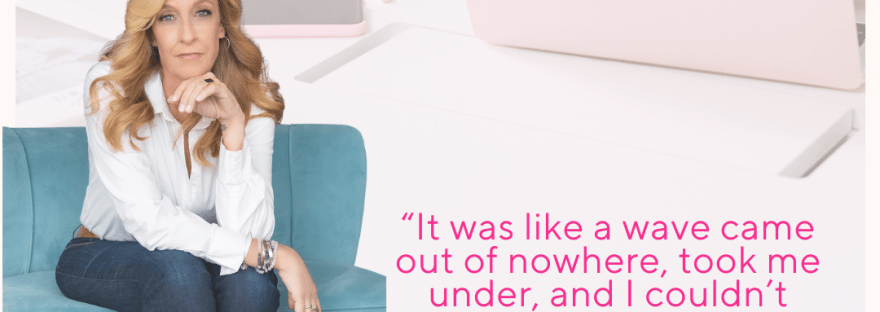
The strangest part was that I don’t even know what caused it. There wasn’t a specific memory or moment. It was like a wave came out of nowhere, took me under, and I couldn’t seem to come up for air. I was completely consumed by my own sadness. Nothing made it feel better, and that part scared me. It felt like I was in a spiral of sadness with no clear reason why.
I texted a friend who knows me well enough to give me exactly what I needed…. a little empathy and a little tough love. Eventually I took a breath, opened the car door, and went inside.
From the outside, the day probably looked normal. Work went on. Conversations happened. The usual rhythm of the day moved forward. But all day I was holding back tears. The smallest things would make my eyes well up….. a kind word, a quiet moment, a passing thought. Nothing dramatic, just the weight of grief sitting right under the surface.
There are moments lately where I almost wish I could just wear a sign so people would understand. Something that says “Caution: grieving.” Or maybe “Hey… be nice. My parents died this year.” Or even the blunt truth: “Hey… my parents are dead.” Not because I want sympathy, but because grief makes you realize how many people are walking around carrying things no one else can see.
In the past, I probably would have suffered through something like that in silence. I would have pushed it down, smiled, and pretended everything was fine. But not anymore. I told my coworkers I was having a hard day and tried to explain how I was feeling. I could not accurately put it into words. They may not have fully understood, but they were kind. They checked on me throughout the day, offered support, and gave me space when I needed it. That mattered more than they probably realized.
One of the things I talked about in therapy later that week is how little space our society really gives to grief. In some cultures, people wear black and are openly in mourning for a year. The loss is visible. The grief is acknowledged. It is understood that healing takes time.
Here, we get a few days off. Then we’re expected to return to life as usual, even though nothing inside of us feels usual anymore.
So when grief shows up months later, or on a random weekday morning in a parking lot, it can hit hard. It can feel like a wave that knocks you down before you even see it coming.
Earlier this week it took me down and tried to pull me under. But the thing I keep coming back to is this: I didn’t drown.
I reached out to a friend. I told the truth about how I was feeling. I let the people around me see that I was struggling instead of pretending I was fine. And somehow, that felt like progress.
Grief is still there. It will probably always be there in some form. But I’m learning that letting people see it, letting them sit beside me in it, is not weakness. It’s part of healing.
And maybe that’s the quiet lesson grief is teaching me now.
The waves may still come, but I am stronger than the ones that try to pull me under. I am learning to swim and surf.

Peace,
#tutulady
#forwardisapace
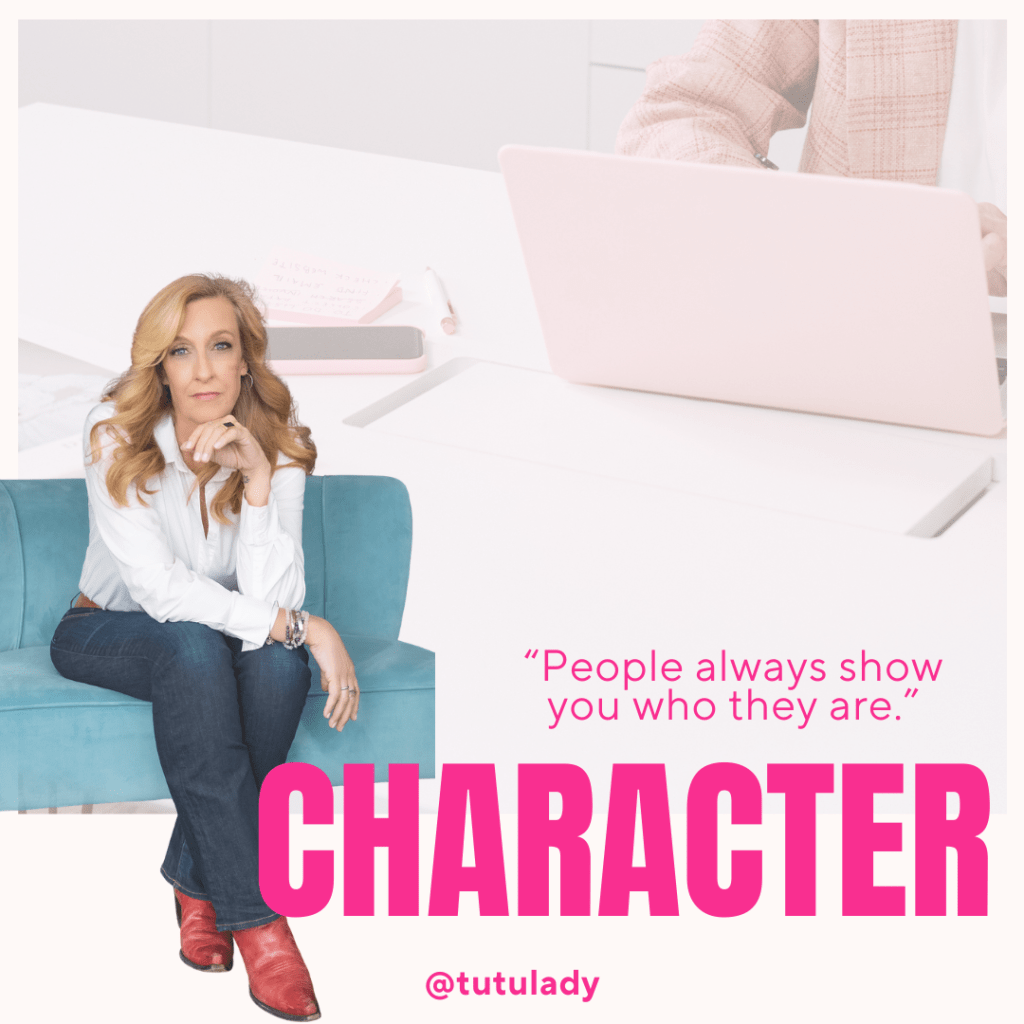
Character

People always show you who they are.

There are seasons in life when we are barely holding ourselves together. Grief, illness, loss, divorce, heartbreak…. those moments when simply getting through the day feels like an accomplishment. They are the most fragile seasons of our lives. And in those moments, something becomes very clear: people reveal exactly who they are.
Just because people process grief differently does not give anyone permission to be cruel. Cruelty during someone’s most vulnerable moment isn’t a misunderstanding or a mistake. It’s a choice. And that choice tells you everything you will ever need to know about a person.
We are often told to be kind because we never know what someone else is going through. That is good advice. Kindness matters. Compassion matters. In life we are also often encouraged to assume positive intent, to start from a place of believing that people mean well.
And I do believe in starting there.
But life also teaches you that there are moments when positive intent becomes impossible to assume. There are people who take advantage of kindness, who see someone grieving or struggling and instead of protecting that fragile moment, they exploit it. They take advantage of your diminished capacity, your vulnerability, your exhaustion, your heartbreak. Not because they misunderstood, but because they could.
There are some things in life that should be sacred. Untouchable. Off limits. Someone’s darkest season should be one of them. When a person is sick, grieving, broken, or simply trying to keep their head above water, that is when the people around them are supposed to step closer. That is when compassion should show up. That is when kindness matters most.
But sometimes the opposite happens.
Sometimes people see vulnerability and they don’t feel empathy…. they see opportunity. They see someone who is too exhausted to fight back, too overwhelmed to defend themselves, too heartbroken to protect themselves. And they take advantage of that moment. They say things they would never say if you were strong. They behave in ways they would never dare if you were standing firmly on your feet.
That is not simply poor character. That is the absence of humanity.
The wounds from that kind of cruelty run deep because they happen at the exact moment you needed support the most. You were already drowning, and instead of throwing you a lifeline, they pushed your head further under. You were already shattered, and instead of helping you gather the pieces, they stepped on them, crushing them even smaller.
I know this not just in theory, but in lived experience. I saw it during my divorce, and I have seen it again in other seasons of loss. Something about grief and hardship has a way of revealing people. When life cracks open and everything feels fragile, the masks fall away. In those moments, people show you exactly who they are.
And over time, you learn that people are not judged by a single sentence they say or one moment they regret. People are known by their patterns. By their behavior over and over again. By how they treat others when things are going well, and when everything is falling apart. By how they treat people when there is nothing to gain and no audience watching. And by how they behave when they do have something to gain. I have seen the worst of humanity in people who were once very close to me. The kind of cruelty that shocks you because you never imagined it could come from them. But I have also seen the absolute best in people, those who quietly step closer when life gets hard, who show compassion without needing credit, who protect others when they are at their weakest. They sit with you and, often saying nothing, help you feel safe.
In loss, people reveal themselves.
And that is how you learn who to trust. I am not a vengeful person, but I do believe in karma. Not the dramatic kind people talk about, but the quieter kind. I know that karma may simply be that some people have to live with the person they chose to be. They have to sit with the choices they made and the way they treated someone who was already hurting. And in the end, that may be consequence enough.
I know that through those seasons I stayed in my lane. I did the best I could with the strength and clarity I had at the time. When I made mistakes, I owned them. I apologized. I worked to correct them.
But cruelty? That is different.
Cruelty is intentional. And when someone chooses cruelty toward a person who is already wounded, it is not something you forget—not because you are holding onto anger, but because you learned something important.
People always show you who they are.
And if you are paying attention, those moments help you see more clearly. They show you who is safe, who is kind, who will stand beside you when life gets hard. In the end, those lessons don’t just protect your heart….
they guide you toward the people who truly deserve a place in your life.

Peace,
#tutulady
#forwardisapace